Herbal and functional tea manufacturing
Tea is a different product category from supplement dosage forms — different production lines, a different quality emphasis, and a different regulatory pathway in most markets. We run it as its own line for exactly that reason.
Why we manufacture tea separately from supplements
Tea bags are already part of our product range. As demand from brand owners has grown, we have developed tea into a dedicated line with its own workshop, rather than adding it to the supplement lines.
Its own workshop
Tea is produced in a workshop separate from our supplement and functional food lines, so botanical material handling and dust control stay contained to the tea operation.
A different quality emphasis
Supplement QC centres on dosage accuracy and potency. Tea QC centres on moisture, particle size, aroma, sensory profile and pesticide residue.
A different regulatory category
In most markets tea is regulated as food or beverage rather than as a dietary supplement, which changes both the label requirements and the import documentation.
Tea formats we manufacture
Flat filter tea bags
Single-chamber filter bags for everyday herbal and functional blends, with or without envelope.
Double-chamber and pyramid bags
Formats that give leaf material more room to expand, used for premium and whole-leaf blends.
Loose leaf blends and bulk tea
Blended loose material for bulk supply, retail tins and food-service use.
Instant tea powder and stick packs
Water-soluble tea powders for single-serve sticks, sachets and jars.
Liquid tea concentrates
Concentrated tea liquids for dilution, beverage manufacturing or ready-to-drink products.
Blended functional infusions
Herb, fruit, flower and spice combinations built around a specific drinking occasion.
Granules and instant mixes
Granulated instant formats designed to dissolve quickly and hold their aroma.
Gift and multipack sets
Assorted blends presented as retail sets, an established format in gifting and travel retail.
Tea products we have produced
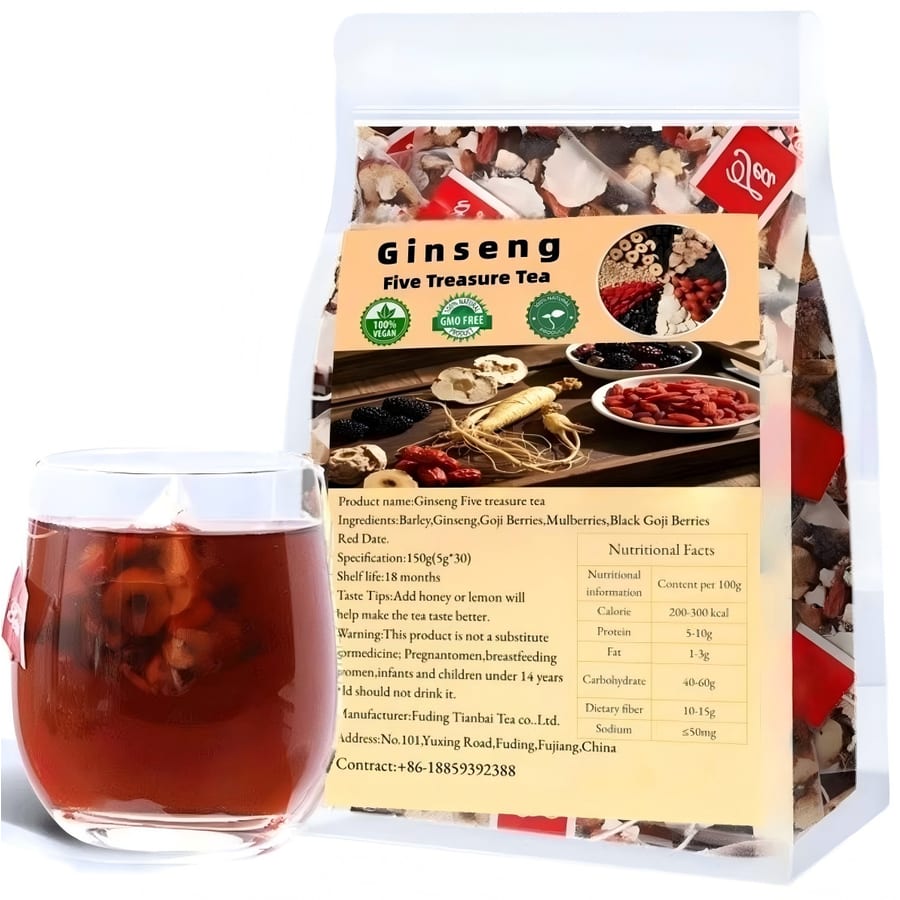
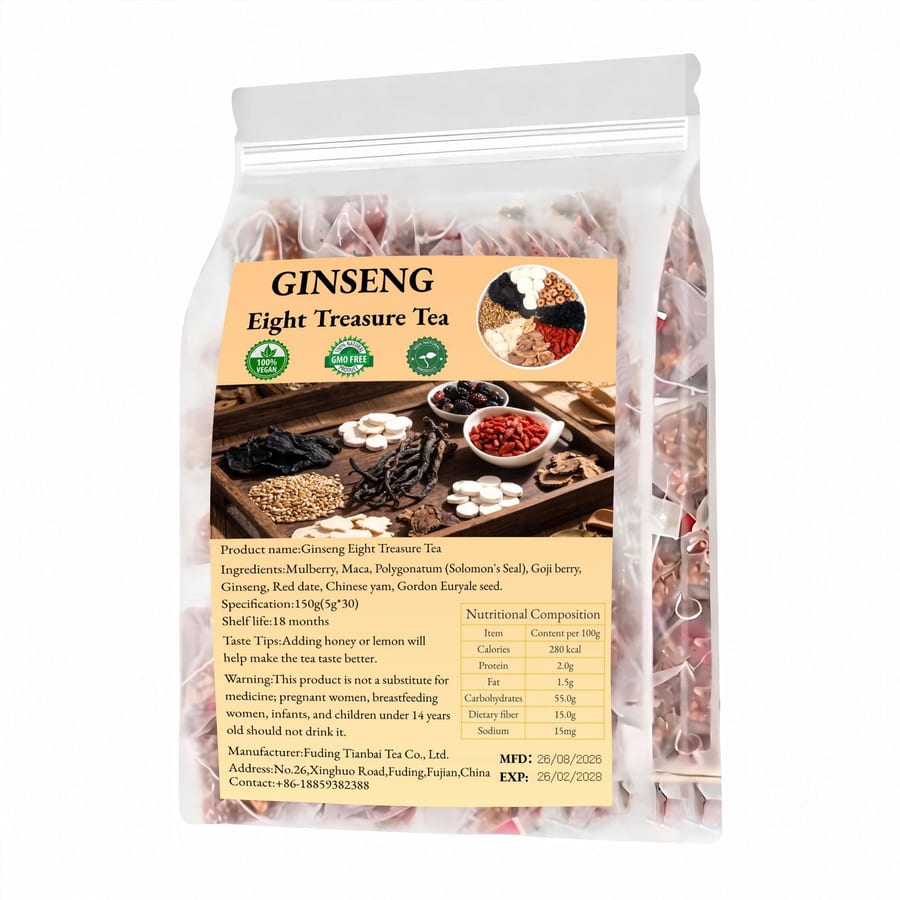
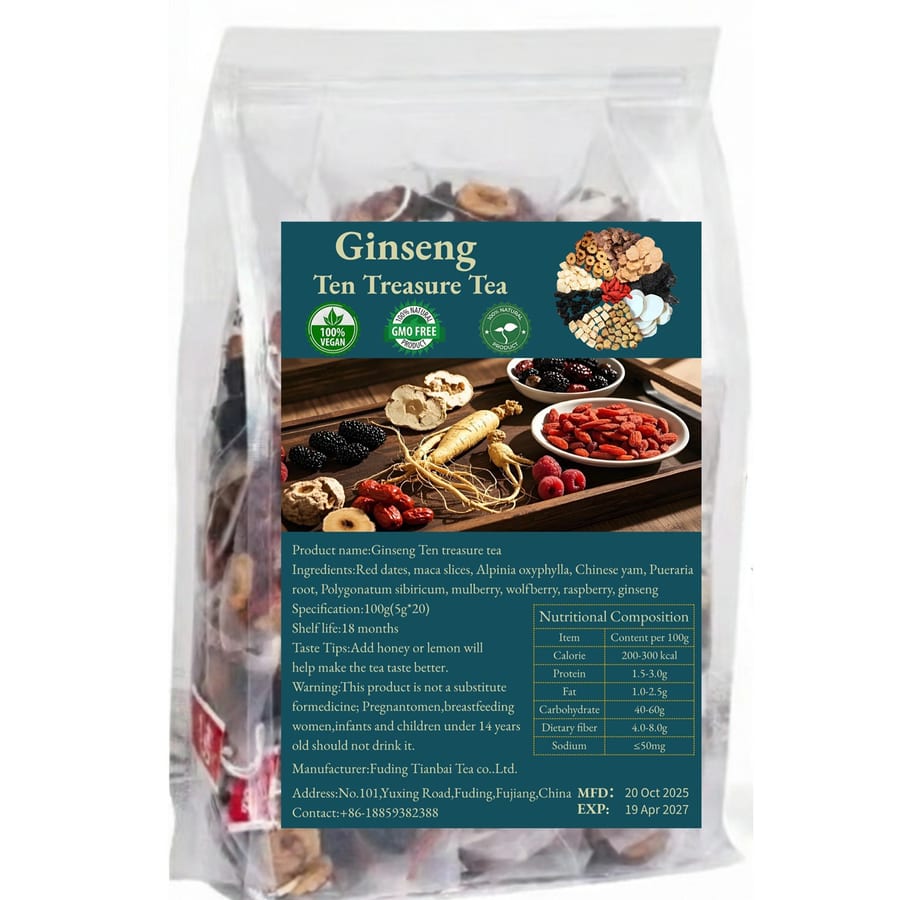
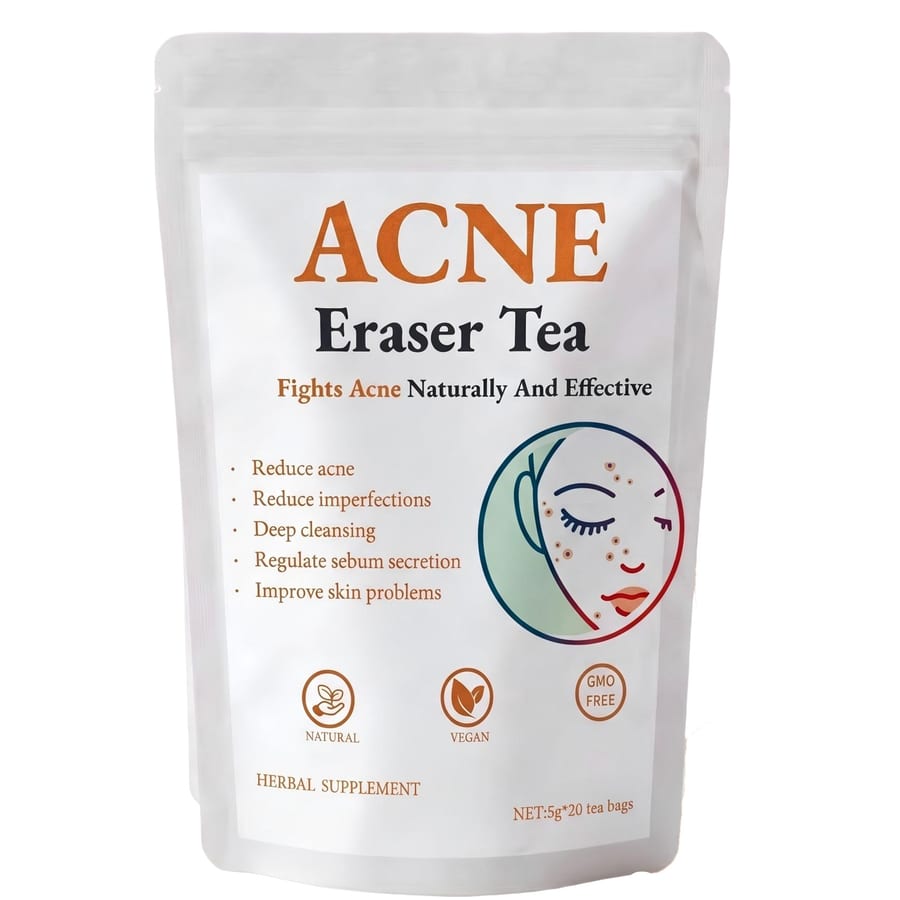
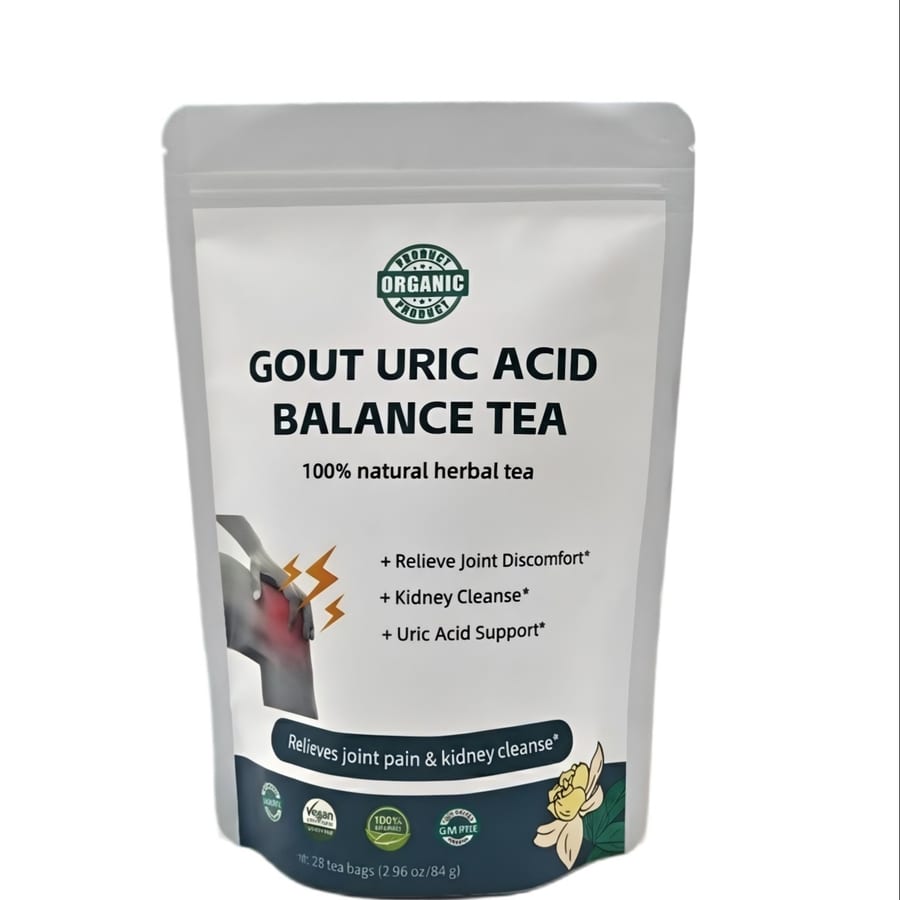
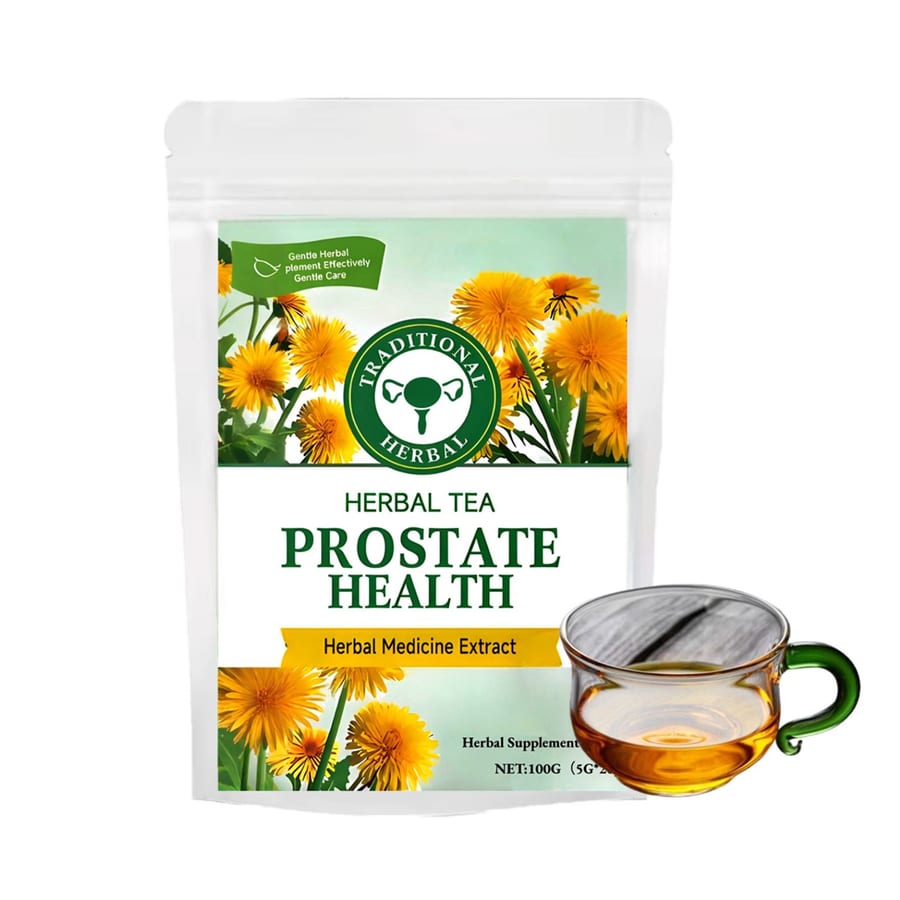
A sample of the finished tea packs our lines have run, shown as examples of the pouch, bag-count and carton formats we can produce.
What you can specify for a tea project
A tea product is defined by its blend, its cut and its aroma far more than by a specification table. These are the variables we work through with you during sampling.
- Blend composition — which herbs, fruits, flowers, spices or teas, and in what proportion
- Cut and particle size — leaf grade, cut size and screening for the bag format
- Aroma and flavour profile — natural flavour, essential oil or spice additions
- Caffeine level — caffeinated, decaffeinated or naturally caffeine-free
- Sweetness — unsweetened, lightly sweetened or with a natural sweetener
- Bag material — filter paper, non-woven, PLA or corn-fibre mesh
- Bag shape and size — flat, double-chamber, pyramid, or a custom fill weight
- Presentation — envelope, tin, pouch, carton, multipack or gift set
- Organic sourcing — tell us early if you need certified organic material, as it affects supply and lead time
Who we make tea for
- Wellness and supplement brands adding a tea format alongside capsules or powders
- Tea and beverage brands extending a range or moving to a new market
- Retail and private label programmes for supermarkets, pharmacies and specialty stores
- Distributors and importers sourcing a complete own-label tea range
- Agencies and consultants delivering a launch for a client
Quality control for tea
The checks that matter for tea are not the same as the checks that matter for a capsule. Pesticide residue in particular is a routine requirement for tea entering the EU, North America and Japan, and it is the reason tea needs its own control plan.
| Stage | What is checked | Why it matters |
|---|---|---|
| Incoming botanical material | Identity, appearance, moisture, foreign matter, supplier documentation | Establishes that the blend starts from material matching the agreed sample |
| Pesticide residue and heavy metals | Testing against the limits of the destination market | The most common reason a tea shipment fails at the border |
| Microbiological testing | Total plate count, yeast and mould, and market-specific organisms | Botanical material carries a natural microbial load that must be controlled |
| In-process control | Blend uniformity, particle size, bag fill weight, seal integrity | Determines whether every bag infuses the same |
| Sensory evaluation | Aroma, liquor colour, taste and mouthfeel against the approved sample | The quality a consumer actually notices, and what keeps them buying |
| Metal detection and final check | Metal detection before packing, plus final pack appearance | Protects the consumer and protects your brand from a recall |
| Moisture and shelf stability | Moisture content and packaging barrier against the intended shelf life | Moisture is what turns a good blend into a flat, stale product |
Two workshops, two product categories
Herbal tea and supplement products are manufactured in separate workshops. Keeping them apart is what allows each category to be managed under the quality and hygiene controls that suit it — and keeps their documentation cleanly separated.
Functional food & supplement workshop
Capsules, tablets, softgels, powders, liquid drinks, gummies and jellies. Segregated areas by product family, with the controls described on our quality page.
- Blending, tableting, encapsulation and softgel lines
- Liquid filling and water-bath sterilisation
- Confectionery lines for gummies, jellies and tablet candies
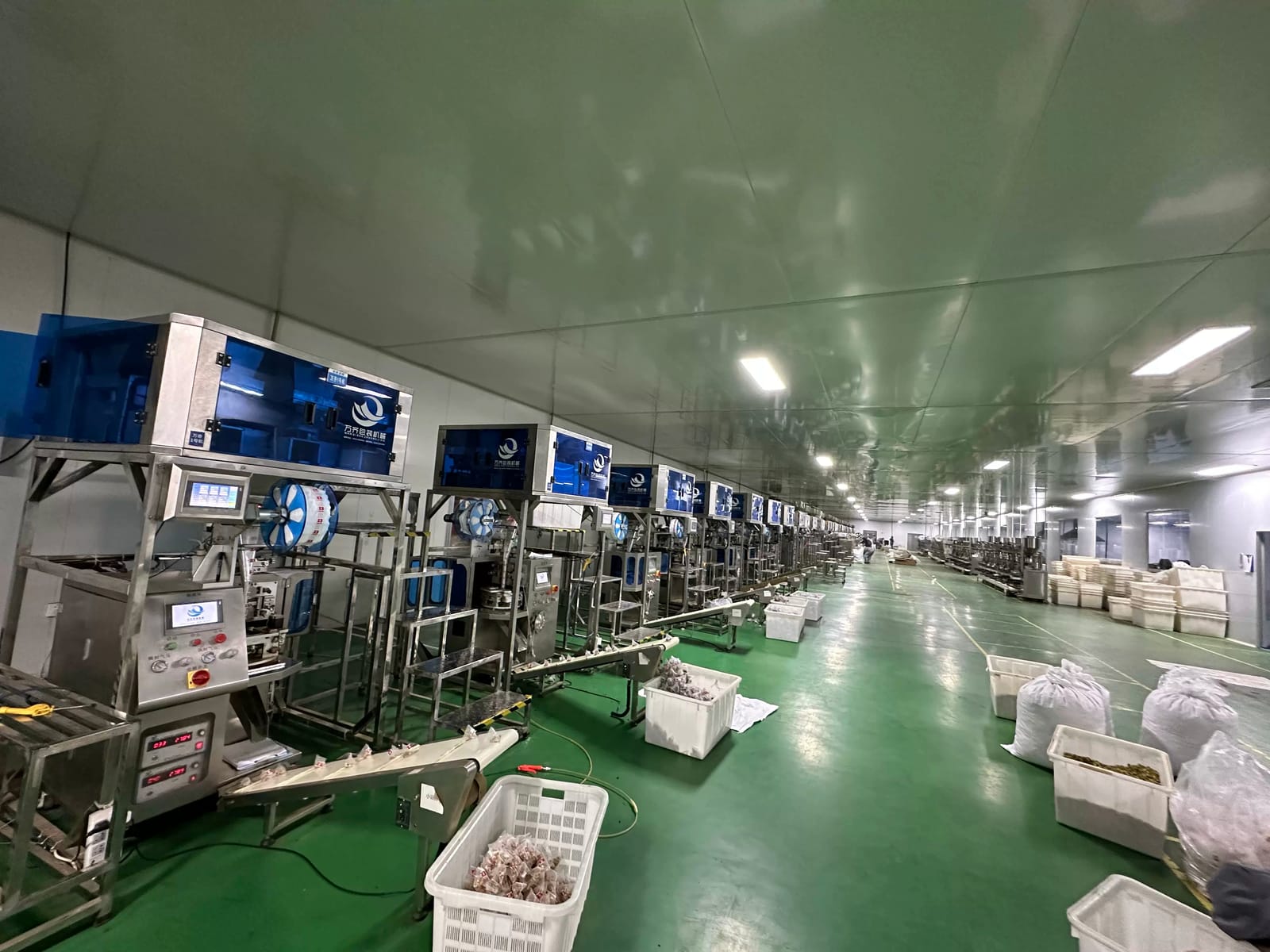
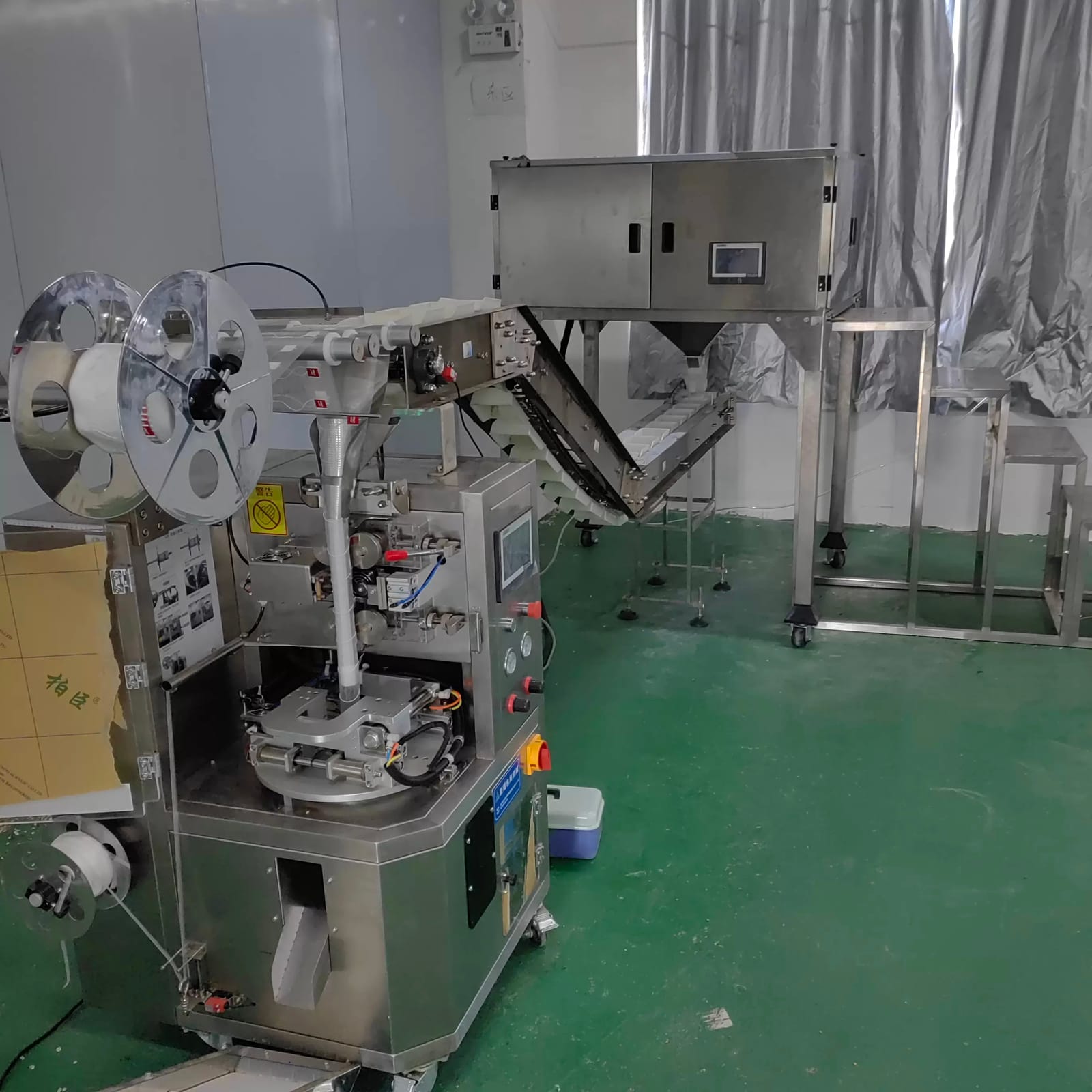
Herbal tea workshop
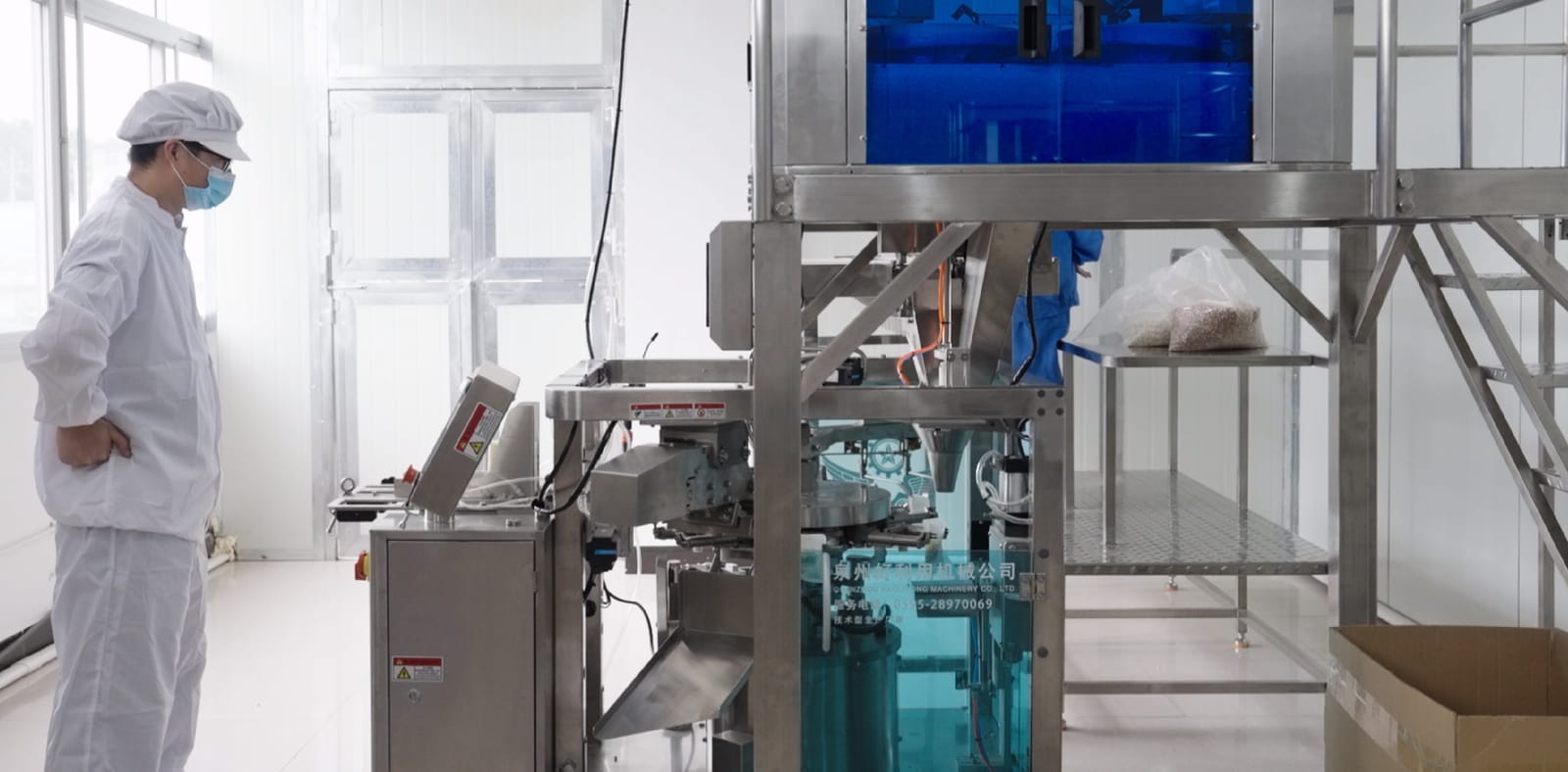
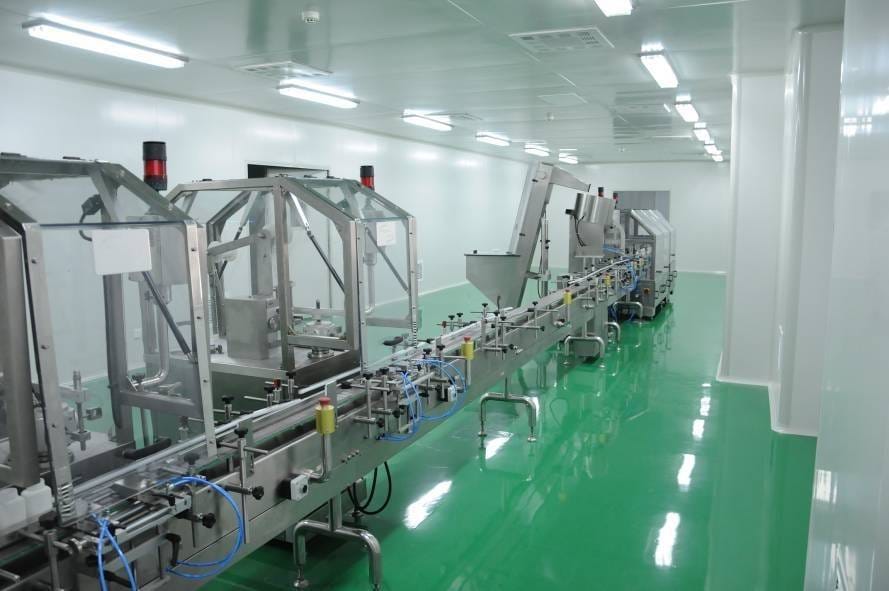
Tea blending, cutting, screening and bag forming, kept in a dedicated area with its own dust control and botanical material handling.
- Blending and cut/screen equipment for leaf material
- Bag forming and sealing lines for filter, double-chamber and pyramid formats
- Metal detection and packing
Tea is not a supplement — and we will not present it as one
In most markets a tea product is regulated as food or beverage, not as a dietary supplement. That changes which claims you can make, how the label must be laid out, and which import documents the customs authority expects. It also changes what your product is allowed to be called.
Marketing a tea as a supplement in a market that classifies it as food creates a compliance problem for you as the brand owner. We would rather tell you that at the quoting stage than after the artwork is printed.
When you send us a tea brief, tell us the destination country and the intended positioning. We will confirm the category we manufacture under, the documentation we can provide, and the label elements your market requires.
What we will confirm per project
- The product category the tea is manufactured and documented under
- The testing package required by the destination market
- Label elements and mandatory statements
- Whether organic or other certification is required, and whether we can source to it
- The documents your importer will need alongside the shipment
Tea manufacturing questions
Can you develop the blend, or do we need to supply a recipe?
Both are possible. Under ODM our team develops the blend with you, from ingredient selection through to an approved sample. Under OEM you supply the blend and we reproduce it consistently at production scale, including matching cut size and aroma.
What is the minimum order quantity for tea?
Tea follows the same starting point as our other lines: 500 units, with production lead time of 7–10 days for 500–1,000 units, 10–20 days for 1,000–5,000 units, and 20–30 days above 5,000 units. Because tea is filled by bag count rather than by bottle or blister, the exact figure for your pack is confirmed with the quotation — particularly where a botanical ingredient is organic or has a long supplier lead time.
Can a tea product carry health claims?
That depends entirely on the market, and it depends on whether the product is classified as food, beverage or supplement there. We will tell you the category we manufacture under, and you should take advice on the claims permitted in your market before committing to artwork.
Is the tea produced in the same workshop as your supplements?
No. Tea is produced in a dedicated workshop separate from our supplement and functional food lines, with its own botanical material handling and dust control.
Do you test for pesticide residue?
Yes. Pesticide residue and heavy metals testing is part of the tea control plan, because it is a routine requirement for tea entering the EU, North America and Japan. The specific test package is confirmed against your destination market.
Send us a tea brief
Tell us the blend you have in mind, the bag format, the pack configuration and the destination market. We will confirm feasibility, MOQ and the testing package your market needs.